Board nominations are open | Australian Veterinary Association

Ready to steer your professional association towards its 100th year?

Board nominations are open

The AVA is seeking nominations for its Board. Can you join a team of leaders and represent your colleagues at the highest level in your association?“If you are interested in helping our profession, joining the Board is a great way to do that. You soon learn what matters to your fellow members and it is a privilege to be a voice for them,” AVA President, Robert Johnson said.Here are some tips and information to help you decide if joining the AVA Board might be the right thing for you now or in the future.

How the Board is formed

The AVA has nine directors. Six are elected directly by the general membership and three are nominated and appointed by the three largest special interest groups (ACV, EVA and ASAVA). Each director has a 3-year term, with a maximum of two successive terms. The President, Vice President and Treasurer are elected each year by the Board.Nominations are invited for two elected positions on the Board of Directors for a 3-year term to take office in May 2017. These elected positions in 2017 are in addition to a position to be nominated by Australian Cattle Veterinarians.

Who should nominate?

The first requirement is that candidates have prior experience as an office holder within a special interest group or division committee.“To be a good Board member, you need to be a good listener and then you need to take the information given to you and be a good advocate for the profession,” Board Director, Dr James Gilkerson said.Some additional skills and experience that are useful include being a member of community organisations, being a member of other boards and committees, a commitment to animal health and welfare, and the ability to prepare reports for the AVA Board.With a lot of the work involving the AVA’s groups and committees, communication and team work are key skills to bring to the AVA Board.“It helps to be patient, diplomatic and to communicate clearly. Directors need to have a broad knowledge of the different groups within the AVA and how they work together,” Dr Johnson said.

How do I nominate?

The Board has a Charter and a Code of Conduct that outline the expectations and operational details of the Board. All election candidates need to agree to abide by the Charter, the Code and the AVA Constitution before their nominations are accepted.You can request a copy of the Director’s information package (including the nomination form) from Amanda Webster: amanda.webster@ava.com.au or 02 9431 5064.If you have questions or concerns, please contact Company Secretary, John Robb, on 02 9431 5040 or or john.robb@ava.com.au. Nominations must be received by 24 February 2017.

What does the Board do?

Directors have legal responsibility for the Australian Veterinary Association Limited (ACN 008 522 852) under the Corporations Act 2001 and they undertake mandatory training to help them understand and fulfil their legal responsibilities.These include ensuring that the AVA complies with all aspects of the law, risks are managed appropriately and all parts of the organisation are doing what they should be doing for the benefit of members.The Board sets the direction for the AVA, makes the big strategic decisions and ensures effective risk management.The Board appoints the Chief Executive Officer and is responsible for managing his or her performance. The CEO is responsible for managing the AVA’s employees and ensuring the Board’s strategy is put into action.

Marcia Balzer

National Public Affairs Manager

This article appeared in the December 2016 issue of the Australian Veterinary Journal
Source: Ready to steer your professional association towards its 100th year? Board nominations are open | Australian Veterinary Association

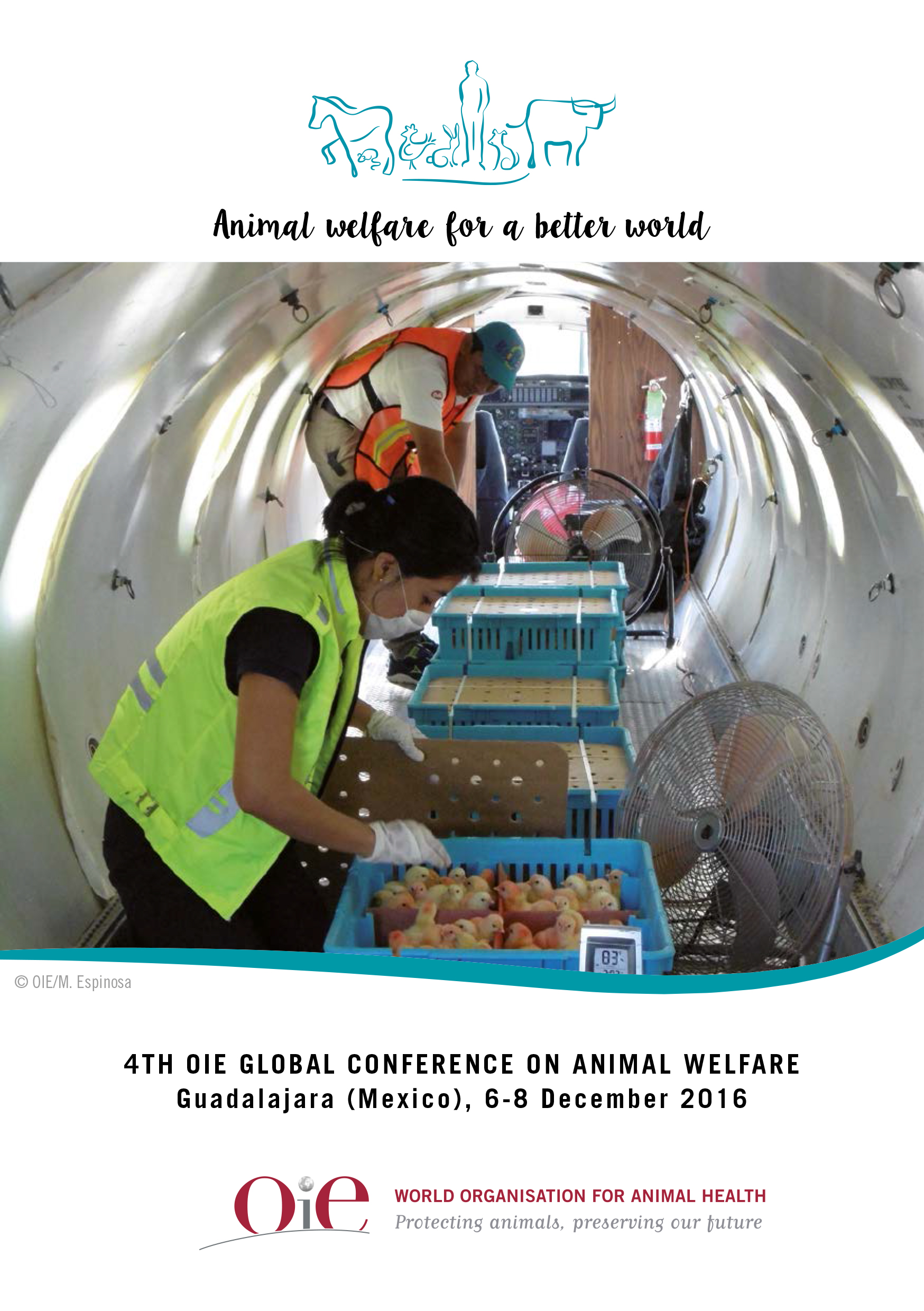
4th OIE Global Conference on Animal Welfare 6-8 December 2016 Mexico

Animal welfare was first identified as a priority in the OIE’s Third Strategic Plan 2001-2005. OIE Member Countries mandated the organisation to take the lead internationally on animal welfare and, as the international reference organisation for animal health, to elaborate standards and guidelines covering animal welfare practices, reaffirming that animal health is a key component of animal welfare.

From this perspective, the OIE is committed to improve the welfare of animals globally and to enhance the positive relationship between humans and animals.

To date, sixteen animal welfare chapters have been adopted by OIE Member Countries. However, implementation of the standards varies around the world. Experience tells us that to implement OIE standards within diverse cultural, economic and religious contexts a variety of tools are needed as well as balanced relationships with committed partners both from the public and private sectors.

us contexts a variety of tools are needed as well as balanced relationships with committed partners both from the public and private sectors.

Source: 4th OIE Global Conference on Animal Welfare

Are you losing the art of conversation? | Tim Dyke, a Veterinarycareers.com.au Guest Blog

Are you losing the art of conversation?

Really great to present to an enthused group of Canberrans recently at our Thank Gods It’s Monday event. We all learn from these experiences – one thing I learned was to be reminded how important conversations are, particularly connected ones.

Maybe you’ll like the quote I read recently – ‘Swimming in a sea of information and drowning in ignorance’. Think about that for a while.

Try this : Breathe in….and out…… (repeat as often as you need to slow down and focus)….. Now time for thinking – we are really exposed to so much ‘immediate’ information from phones, internet etc. How much time is all that exposure to information distracting us from being human….and doing things humans used to do such as interacting properly with others through real conversations? Real conversations give you a feeling of connection, of being present, and being human. Try one and see how you feel.

Is that a change in mindset you need to practice?

Try it at least once a day for the next 100 days. People will appreciate your attention.

Tim Dyke, AltusQ Coach

Source: Are you losing the art of conversation? | AltusQ

Unreal Veterinary Careers! An interview with Executive Coach, Dr Tim Dyke BVSc….

The other day, I (Emma) met a great guy for a coffee in my little township of Yass NSW – and while LinkedIn told me that Dr Tim Dyke was a vet with an impressive and diverse list of career roles I didn’t expect to meet such a wise, authentic and personable guy. We chatted easily and it has furthered my interest in using a coach – in Tim’s words coaching can help to clarify what you want to achieve through ‘exploring beliefs and strengths and uncovering roadblocks and fears’.

While Tim has a deep experience set across a number of veterinary and regulatory fields his quietly assured and reflective manner also left me feeling more inspired to make the most of my veterinary career! If you are interested in planning out the next steps in your career using a coach – I strongly recommend that you consider Tim for this all-important role.

Emma: Thanks for your time today Tim…. May I ask…:

  1. What are you working on / towards at the moment? 

I am enjoying a new career move as an executive and business coach, as well as working as a consultant to the Australian government.

  1. What drives you? 

In simple terms, I want to help people. I find that, irrespective of where I am working and what I am working on, I develop a passion for an organisation, its purpose and values, and its people, and give energy to each.

timdyke2

  1. What have been the major transitions in your path? 

Looking over the last 30 or so years, I’d have to agree with a colleague who once said that I seem to re-invent myself every 5 to 10 years!

Following an internship at University of Sydney at Camden, I moved to University of Melbourne for a residency in equine medicine and surgery. While I enjoyed clinical work, I wanted to explore my interests in pharmacology, and became a Lecturer in Veterinary Physiology and Pharmacology and then a Lecturer in Equine Medicine and Surgery, with a particular interest in drug detection in racehorses, at a time when there was a divide between the analytical chemists and veterinarians. That led to me travelling overseas as a Merck Foundation Fellow in Veterinary Clinical Pharmacology and a (second) residency and PhD at The Ohio State University. Following American Board exams and an Australian College Fellowship, I moved back to a position in the Australian government at the then NRA (now APVMA) – and moved up through that organisation to the position of Principal Scientist and then Program Manager, Regulatory Strategy and Compliance. It was during my time at the NRA / APVMA that I became more interested in leadership and ‘soft’ skills – more so than veterinary / research / technical skills. This led to an MBA and a move to senior executive roles. I then moved to the human health portfolio to the National Health and Medical Research Council and had a number of senior executive roles there culminating in being responsible for areas of research policy and strategic communications.

Eighteen months ago, I left the public service and asked myself what did I want to do next?

I did three things: returned to veterinary practice, joined AltusQ, a national business and executive coaching firm, and also did consultancy work for the Australian government.

Coaching others has been part of my entire career, and now I have indulged in learning more and focus on helping others ‘help’ themselves and grow.

  1. What has been a major highlight of your career?

A major highlight of my career has been to continue to adopt the skills and ‘thinking’ I developed as a veterinary student and veterinarian to new work in fields new to me – including regulatory science, corporate services, human research ethics, Aboriginal and Torres Strait Islander peoples’ health, governance of human clinical trials, and national strategic policy frameworks.

I’ve been honoured to work with great people, to work nationally and internationally and to be presented with some ‘wicked’ problems to solve. Veterinary science has shown me how (biological or constructed) systems work, the importance of feedback loops, how skills in one area can be adapted to another area, and given me an appreciation of knowing the depths that are possible in any subject area (and the expertise needed to explore those depths) as well as the importance of being able to take a ‘systems’ view.

  1. What advice would you offer to younger veterinarians?

Maybe more than any other university training, a degree in veterinary science provides you with a strong skill set over and above a knowledge of animals, diseases, diagnostic techniques, treatments and public health. This skill set is yours to help open up many opportunities in many fields.

Know what your passion and purpose are, and keep reminding yourself of them.

Grab opportunities and run with them.

Challenge your fears and beliefs – they are only stories you tell yourself.

Trust your ‘gut’.

Always take opportunities to learn more.


… Emma: Thanks Tim … (ends)

Vets’ mental health crisis: Nembutal in the spotlight

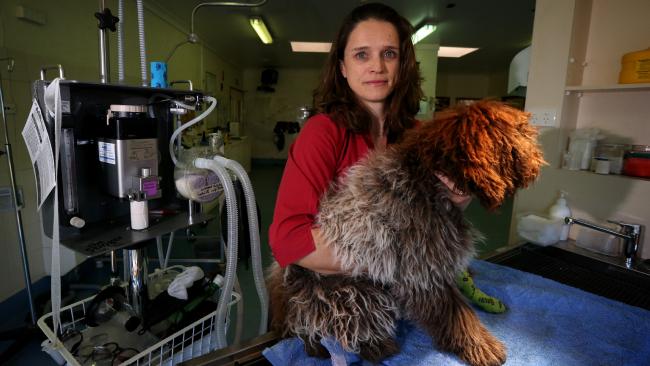
Photo: Canberra vet Alison Taylor, with Charlie the lagotto, says vets need a supportive environment. Picture: Ray Strange

The scourge of suicide is striking the veterinarian community more than any other industry and the official body representing vets is backing a clampdown on how the most commonly used death drug is managed.

Studies suggest vets ­commit suicide at four times the rate of the general population, commonly with the same drug they use to ­euthanise animals, pentobarbital.

The Australian Veterinary Assoc­iation is calling for laws that demand the drug be kept more ­securely in surgeries and vehicles, as there is no regulation on its storage at clinics. But it has rebuffed suggestions that the drug, also known as Nembutal, should be reclassified as a level eight controlled drug by the Therapeutic Goods Administration.

The government body is considering changing the classification of the drug to the same level as morphine, but the AVA said in its submission that this would do little to prevent suicide while making the role of animal welfare harder.

AVA policy manager Debbie Neutze said the change in classification would be too onerous, ­requiring an explanation for how every milligram of the drug was used and requiring pet owners’ names and addresses.

“Euthanasia in a veterinary practice is often undertaken in emergency situations, often involv­ing multiple patients, often out in the field, often with no actual­ owner,’’ Ms Neutze said.

“For example, vets use it to euthanase wildlife after bushfires.

“And it is a drug used in everyday vet practice, so the recording of every little milligram would be difficult.”

She added that the record-keeping requirements of the schedule eight classification were designed to tackle the ongoing abuse of drugs, which is not the case with pentobarbital users.

Ms Neutze noted there were various reasons for poor mental health in the industry, including a familiarity with euthanasia, the distress of putting down animals and high-pressure work. Vets are also surprisingly modestly paid, with an average wage of $79,000, lower than the national average.

The AVA was rolling out var­ious programs to address the problem, including a mentoring program for new vets, while teaching first aid in mental health.

A trustee of the AVA Benevolent Fund, Brian McErlean, said there was anecdotal evidence that the programs were working, with only one reported suicide in the profession in the past year.

Before this, over an 18-month period the AVA recorded six suicides, which equates to about 40 suicides per 100,000 people — four times the national average.

Canberra vet Alison Taylor is a part owner of five practices in the city and believes the industry has come a long way in dealing with the mental health of its workers.

She was a mentor to graduate vets and students and has taken the AVA’s mental health first-aid course.

“The main thing that leads to vets that don’t cope so well is when they are in an environment where that is not supported or recog­nised, where they don’t have enough support and they feel isol­ated,” Ms Taylor said.

“It is a high-pressure job and if there are not people looking out for them then that leads younger people to feel more vulnerable.”

Beyondblue chairman Jeff Kennett said the suicide rate of vets was “a great concern”, adding that the issue was raised at the charity’s board meeting last week.

Source: Vets’ mental health crisis: Nembutal in the spotlight