Caring For Sick And Dying Animals Can Cause Compassion Fatigue

Hero Images/Getty Images

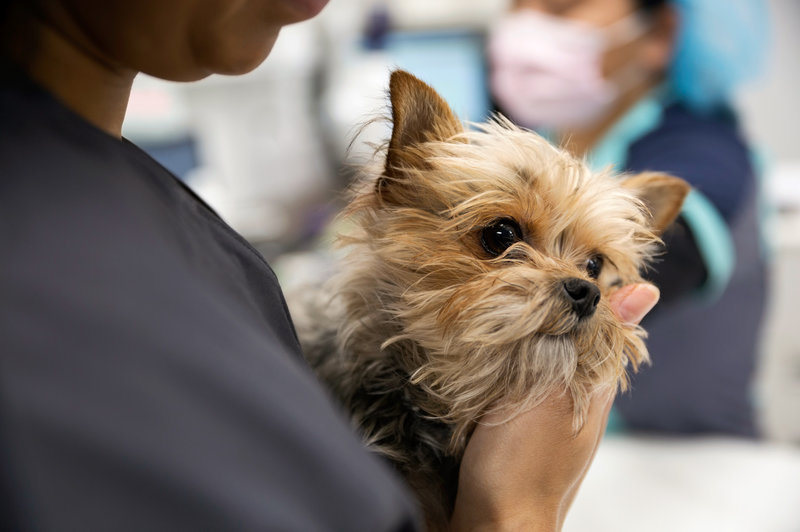
Veterinarians say that helping suffering animals and stressed-out owners can become grueling.

When I walked dogs at a Chicago animal shelter, I wondered how each one got there. Whether a stitched-up pup shirked from my touch or happily greeted me tongue-first, my eyes would well up with salt. I wanted to keep them all.

People who work in animal shelters or veterinary clinics try to save the animals that come through their doors. But they’re at high risk of compassion fatigue, a sustained stress that takes a toll on a caregiver’s mind and body — and her heart.

It can morph into many forms: Some feel guilt or apathy, others turn to substance abuse. Little data exists, but research suggests veterinarian suicide rates are some of the highest in the medical field, and a 2014 study of about 10,000 veterinarians found twice as much “severe psychological distress” in them than in the general public. One 1 in 6 veterinary school graduates say they have considered suicide.

People in the animal community know this is a risk, and they have stories of people they’ve known who have taken their lives.

Among the biggest strains for animal shelter employees is euthanasia, according to a 2009 study published in the Journal of the American Veterinary Medical Association. Derived from Greek terms that mean “good death,” euthanasia is viewed as a humane way to end an animal’s life by organizations including the American Veterinary Medical Association and PETA.

Though rates of animal euthanasia have sharply dropped in the last few decades, about3 million cats and dogs are estimated to be put down every year. When faced with alternatives like neglectful owners or living on the street, a peaceful death might be the most merciful option, says Stephany Lawrence, a former shelter intake and adoptions manager in Denver. Shelter life can be scary, even detrimental, especially if the animal is ill or has a behavioral issue.

“Nothing is worse than killing an animal, but it’s a really, really compassionate process,” Lawrence tells Shots. The euthanasia is quick; the employees are tender. But the grief of a life extinguished and the suffering that preceded it can linger. “What I struggled with was how anyone could give up a pet or treat animals as disposable items,” she says. “And I actually think that’s probably something shelter workers have a hard time with, as much, or even more so, than euthanasia.”

Private animal hospitals practice euthanasia, too, but there the patient is often a beloved pet. And veterinarians and staff have to manage both the end of the animal’s life and the humans’ grief.

On some days, the tide of clientele truncates how much time and compassion a doctor can give a dying patient or an owner trying to cope. That’s when the fatigue rears for Krista Magnifico, a veterinarian in Jarrettsville, Md., who writes a behind-the-scenes blog “You feel guilty because you’re not there for them in the capacity that you want to be,” she says.

Veterinarians and rescue workers face another challenge: stressed out and even hostile humans. One reason is cost. Veterinary care can be very expensive, even with insurance, and financial constraints can lead to tense situations. If they escalate, stepping out for a breather or bringing in another staffer can help. Sometimes, conflicts escalate to the point where a clinic has to call the police.

Magnifico won’t turn away clients who love and want to help their pet. But if they’re not empathetic to the animal, or the relationship has fractured and no longer benefits the pet, she’ll suggest alternatives, like seeing another clinic. “I have to be very true to the core of who I am,” she says. “And with that, I know that I’m not a veterinarian for everybody.”

Once someone brought in a dog with a bone tumor in its leg. To relieve the pet’s pain, a staff member at Magnifico’s clinic advised that the limb be amputated. But the owner declined the procedure, tied the dog to a tree in front of the clinic, and left.

Sometimes clients ask for convenience euthanasia. Other times, owners threaten to kill the pet themselves. In those cases, the people at the end of the leash cause the most distress for animal shelter and clinic employees.

“The rhythm of a healthy life is fill up, empty out; fill up, empty out,” says Patricia Smith, founder of the Compassion Fatigue Awareness Project, which aims to help caregivers learn healthy forms of self care. But caregivers tend to spend their empathy on everyone but themselves, and they forget to refuel. “The result of that is we have nothing left to give,” Smith says. “We give from a place of depletion instead of abundance.”

“One of the hallmark signs of [compassion fatigue] is that you cannot undo what you’ve been exposed to, and your worldview is forever changed,” says Elizabeth Strand, founding director of the University of Tennessee’s veterinary social work program. Strand noticed a huge need in the veterinary environment for social work, and Tennessee was the first school in the country to create a specialty in veterinary social work. Michigan and Missouri now offer similar programs.

Veterinary social workers provide support for animal-related professionals who need an extra hand resolving stress or stubborn conflict. They can also gently guide grieving pet owners through heartbreak, or help figure out what to do when an animal is a victim of family violence.

Strand and others say that veterinary professionals are becoming more willing to talk about the mental health stresses of their work, and veterinary schools are addressing mental health and emphasizing communication skills.

To bolster resilience, students at Cornell University’s College of Veterinary Medicine participate at the teaching hospital as early as their first year, so that they’re accustomed to working with very sick animals and distraught owners. Students can also staff the school’s pet loss support hotline after special training.

The veterinary school at University of California, Davis, has one full-time counselor and one part-time counselor just for veterinary students. “As our counselor started getting busier and busier, we thought that we had a problem, and what we realized is that this was not a problem,” says Dr. Sean Owens, associate dean for admissions and student programs at Davis’ School of Veterinary Medicine. “We’re actually doing a better job of destigmatizing talking to mental health professionals, meaning that our students are now more likely to drop in and say, ‘I just spent four hours grieving with a client … How do I process it?’ ”

The Davis program provides yoga, art projects, massage therapists — even a surfing club. Clinical skills labs that use actors who practice common scenarios, though awkward, can lift confidence later. The school was the second veterinary school after Colorado State University to offer a “healer’s art” course, which embraces the emotional aspects of practicing medicine.

“What has really triggered [change] has been the greater publicity of suicides of veterinary students,” says Owens. “You’re not fully complete in this profession unless you’re able to grieve and be a human.”

Kasia Galazka is a freelance science writer who has written for BuzzFeed, Psychology Today, Pitchfork and Paste. Follow her on Twitter: @supergalaxy.

Source: Caring For Sick And Dying Animals Can Cause Compassion Fatigue : Shots – Health News : NPR
Unreal veterinary careers! … an interview with Dr Natasha Wilks of High Performance Vets

Dr Emma Davis speaking with Dr Natasha Wilks BVSc DipCoaching of High Performance Vets 

Intro: What has inspired us to create veterinarycareers.com.au are the amazing people that we get to meet and learn about their career paths, and today I am speaking to a great veterinary entrepreneur in Dr Natasha Wilks. 

Dr M: Welcome Natasha and thanks for your time today:

Natasha: Hi Emma, thanks for interviewing me today.  Perception is interesting isn’t it, as I’ve never seen myself as an entrepreneur (I will have to now!).  I am so privileged to be able to help veterinarians in achieving their career goals and thrive personally.

Dr M: Natasha I have been following part of your career via your business High Performance Vets on social media for a couple of years now and I love the information that you put out there as I am always learning something about myself! May I ask what are you working on at the moment? 

Natasha: I have a few projects that I’m currently working on.  I am speaking at 3 conferences in the next 4 months that I have to prepare months in advance for.  So I am researching and writing the session notes for them.

I have an international contract where I am training a whole team on-site in October.  I am spending the next 2 months training and coaching their veterinarians so they will already have results by the time I arrive.

My newest course, Income Accelerator, which started in mid July, is an 8 week online course working with veterinarians to increase their income.  

I also have my wonderful private coaching clients who are so great to work with.

Dr M: You seem to be really involved in the profession and your career – what drives you?

Natasha: Unfortunately, I’ve had a number of people close to me pass away suddenly.  It helped me focus on what really is important in life.

You never know what may happen so it’s important to live a great life now, whatever ‘great’ is for you.

I see so much frustration, disillusionment and sadness in our profession.  Veterinarians are incredible.  We are determined, resourceful, passionate and incredibly hard workers.  However, sometimes that is to our detriment.  The one thing we neglect to do is look after ourselves. 

I can’t stand by and watch suffering.  That is why I do what I do.  All my trainings are designed around what I have learned and know from my many years in practice and training so that life and practice becomes easier.

The veterinary profession is changing and veterinarians need to start anticipating the changes and prepare now to have a competitive edge. 

Lastly, I’m very driven by my family.  I want to be there with my kids as they grow up, give them as many opportunities as I can and most importantly, teach them life skills.

Dr M: What have been the major transitions in your career path? 

Natasha: I wanted to be a large animal vet but I had to stay within large cities so my husband could be employed in his profession.  After working in the UK, I came back to Australia for a position that didn’t work out for me. I will be forever grateful as it pushed me into doing my coach training (I’m not a natural risk taker). It was then I realised, that this is what I was meant to do as it tapped into my natural strengths. 

Having children was a major transition for me.  All ambition went out the window and I was surprised to find I just wanted to be a mum.  Once my youngest starting school I could think again and I was ready to move from motherhood to being more focussed on my coaching practice.

In 2015, I was invited to be a committee member of the AVA Practice Management group.  I’m really enjoying being involved.

My recent transition has been recognising I can’t do it all at once.  I am very aware of not over committing myself and taking down time for myself.  My workload has to be sustainable as I’m no good to anyone if I burn myself out.

Dr M: What goals are you working towards? 

Nat Wilks (2)
Natasha
: I have a health and fitness goal as I have been carrying way too much weight for too long!  All the recent conferences haven’t helped either!

I have a number of programs I want to finish creating over the next 12 – 18 months so in the future I can focus on helping veterinarians worldwide.

Everyone must have an income goal and on the 30th of June, I hit mine so I have set another one that is a bit terrifying.  I’m not sure how to achieve it yet, but I’ve learned that if I set the goal and take action, I’ll get there. 

I want to do more training in neuroscience and positive psychology. Our brain is fascinating and I am interested in the effect mindset and the workplace has on an individuals performance and wellbeing.

We are planning a family trip to Cape York in 2017 which I am very excited about.  

Dr M: What advice would you provide a younger you? 

Natasha: You don’t have to know it all.  You can ask for help.  Believe in yourself.  Write down every win, no matter how small, and look at them in the tough times.  Negotiate your salary.  Stop discounting.  Keep learning and growing and if you find you aren’t anymore, find new opportunities or a new practice.  It does get easier. Go for those jobs that you want but don’t think you are good enough for.  It’s not failure, it’s a learning opportunity.  Get training on communication. Trust your intuition, it’s usually right. Start using good face creams now!

Dr M: Where can people find you to get in touch?

Natasha: www.HighPerformanceVets.com,  info@highperformancevets.com  +61 (0)434 836 178

Dr M: Thanks for your time today Natasha

Can I work in Australia as a veterinarian?

Veterinary degree recognition series – part 1: Can I work in Australia as a veterinarian?

A frequent question here at Veterinarycareers.com.au is “Am I eligible for that job that you posted?”

Notably we are posting jobs from all over the world so if you are Australian and graduated from an Aussie vet school then let’s say its ok to apply for jobs in Oz – likewise we treat our Kiwi colleagues in New Zealand as another State and give them equal access to our job roles (I will have to check that stands in Government roles – but I know some awesome Kiwis who have helped protect our shores in Government roles – so I think it is a safe bet)

… so lets not teach people how to suck eggs or avoid the hard questions anymore. It’s obviously a large topic when you look at the possible combinations of location and degree, and throw in Visa eligibility over the top of that. I suggest we travel together via an investigative journey and see if we can make sense of where the opportunities lie and how to successfully navigate the challenges with the particular veterinary degree that you have gained.

Part 1: Working in Australia – What Qualifications are currently recognized?

To work in Australia as a veterinarian you must be registered to do so.

STEP 1: Who makes the decision on recognizing my degree?

In Australia the body who makes decisions on who is eligible for veterinary registration is the Australasian Veterinary Boards Council Inc.

STEP 2: Who registers veterinary surgeons in Australia?

Each State and Territory in Australia then has a Veterinary Surgeons Board (VSB) that a veterinarian needs to be registered with to practice (and this includes a lot of public practice roles like Government). There is a good list of the VSB Contacts on the Queensland Government Website – although some details (e.g ACT VSB) may need updating.

STEP 3: How do I become a registered veterinarian in Australia?

To be eligible to apply for registration as a veterinary surgeon in Australia and New Zealand for registration you must either:

  1. have obtained your primary veterinary qualifications in Australia or NZ
  2. be eligible to apply for registration without further examination, or
  3. if you are an overseas trained veterinarian and meet your degree meets certain criteria and then you successfully complete the National Veterinary Examination (NVE) you can become eligible to be registered.

Who can be registered to work in Australia without further examination?

The list of who can apply without further examination (AVBC Website ) includes when your primary qualification was obtained via:

  1. an American Veterinary Medical Association (AVMA) accredited veterinary school AND you have passed the North American Veterinary Licensing Examination

OR

2. a Royal College of Veterinary Surgeons (RCVS) accredited veterinary school in United Kingdom and South Africa; or

3. you have been registered with the RCVS by passing the RCVS examination

4. you have successfully completed the Educational Commission for Foreign Veterinary Graduates (ECFVG) examinations (in USA or Canada)

The Full list of University degree courses this currently includes is available here: FULL LIST

Obviously this will only be part of your move to Australia – you also need to meet the requirements of a work visa and be eligible for entry via the skilled migration list or be otherwise eligible to live and work in Australia (there is more on this below).

What is the National Veterinary Examination?

The National Veterinary Examination (NVE) has been developed to assist veterinarians who qualified overseas to obtain registration in Australia, thus enabling them to practise their profession. Procedures have been established by which eligible overseas trained veterinarians may prove their competence to practise in Australia. To do this you must:

  • Have done veterinary training at a recognised University
  • Be eligible for registration in the country where you trained
  • If your first language is not English, you must pass the International English Language Testing System (IELTS) to a given level (detailed on AVBC Website).

The NVE process is a little daunting but I know quite a few people who have successfully done this and who are now Aussie vets! The details of who is eligible for this process are on the ABVC NVE website page.

There are two parts to the NVE a preliminary exam and a final exam.

 1. The preliminary exam is offered twice a year and at various places around the world. It is a test where there are three parts each with 100 multiple choice questions. You have to take the test within the time that your English proficiency test is valid (usually 2 years). Some VSB’s will let you apply for a limited registration to practice after completing this preliminary exam.

2. The final exam is held over a 4-5 day period and held at an Australian Veterinary School. The format of the exam can be found [HERE – as of 9 July 2016]. This test must be attempted and passed within about 2 years after the first test.

Successful completion of the NVE will enable the AVBC to provide a skill assessment for the purpose of migration for the nominated profession of veterinary science. This opens the possibility for the skilled migration system (below).

Australian Work Visa’s and the Skilled Migration List

Obviously of course you must also hold a visa to work in Australia, further information about working visa’s can be found on The Department of Immigrations website  and it will also be worth looking up the Skilled Migration List process.

Getting a VISA and being eligible to register as a vet in Australia means you can start to apply for veterinary jobs in Australia. You will need to compete the registration process before you start practice.

The skilled migration list, as I understand, is for where Australia needs assistance to fill skilled roles. In Australia that veterinarians are on this list is currently controversial within the profession as there is a belief that we have too many graduates. But in reality many employers are finding it hard to fill vet roles. So particularly if you are keen to move to the Australian countryside – this might be the best route of entry for you and your family. I recommend getting advice form a company that specialises in arranging skilled migration visa’s to help you navigate the process.

Having a profession on the Skilled Migration List means that employers in Australia can nominate to employ you – and this job is pre-arranged before you arrive. I am not sure if this is permanent emigration or temporary and if and how it includes your family and partner – I will look into it a bit further and report back.

The AVBC website has a good overview of the ‘skilled migration’ process – but there could be other ways to be eligible for a work visa – so please keep this in mind while you are researching for visa or emigration requirements.

Thanks for reading – watch this space for part II – and I am open to suggestions on which part of the puzzle to bite off next!

Cheers

Dr M

ADVERTISE your VETERINARY JOB VACANCY NOW & receive 70% OFF

Veterinarycareers.com.au special BONUS RATE ~ valid until June 30 2016

FIRST 2 VETERINARY JOB ADS ONLY $30.00 AUD ea

~ Valid till June 30 2016 ~

(Usually $100.00 AUD)

this package includes:

  • Distribution of your job advert to a targeted audience
  • VeterinaryCareers.com.au now features a veterinary industry audience of between 3 and 10 000 members and will tailor the audience to the specifics details of your advertisement
  • Weekly re-posts and a FEATURE STATUS for 30 days
  • Your advertisement in the featured jobs section ~ front page
  • Available for the first 2 job ads you place in June – then standard rates apply.

ABOUT US~

logo blue

The website veterinarycareers.com.au is a job board that specialises in veterinary public practice roles, and also provides current news and information about issues related to our field.

The admin of this site are each experienced in different sectors of public veterinary practice and have a good understanding of world trade, domestic biosecurity and food safety. We are keen and ready to work with veterinarians seeking job roles (even consultancies) and with employers seeking the right person for the role.

Our service is free for veterinarians looking for work – you can simply create a profile, save your resume and send through any job applications via the site (and your profile will record all your applications).

Advertisers pay a reasonable fee for a range of services like our EOFY $30 deal

Source: Products | Veterinary Careers

PLOS Medicine: Toward a Common Secure Future: Four Global Commissions in the Wake of Ebola

Interesting free to air article on lessons learned through Ebola outbreaks…(Dr M)

Summary Points

Four global commissions reviewing the recent Ebola virus disease epidemic response consistently recommended strengthening national health systems, consolidating and strengthening World Health Organization (WHO) emergency and outbreak response activities, and enhancing research and development.System-wide accountability is vital to effectively prevent, detect, and respond to future global health emergencies.Global leaders (e.g., United Nations, World Health Assembly, G7, and G20) should maintain continuous oversight of global health preparedness, and ensure effective implementation of the Ebola commissions’ key recommendations, including sustainable and scalable financing.

Source: PLOS Medicine: Toward a Common Secure Future: Four Global Commissions in the Wake of Ebola