PhD Studentship – Investigating causes of lamb loss on Highland farms and crofts 2019 – Edinburgh UK

PhD Studentship – Investigating causes of lamb loss on Highland farms and crofts 2019
Duration of Post
3.5 years
Salary Range
£14,777 per annum stipend (£15,009 in 2019/20)
Location
Edinburgh UK
Job Description
PhD Studentship – Investigating causes of lamb loss on Highland farms and crofts

We are seeking a highly motivated individual to carry out PhD research in the field of livestock health, wildlife ecology and veterinary science.

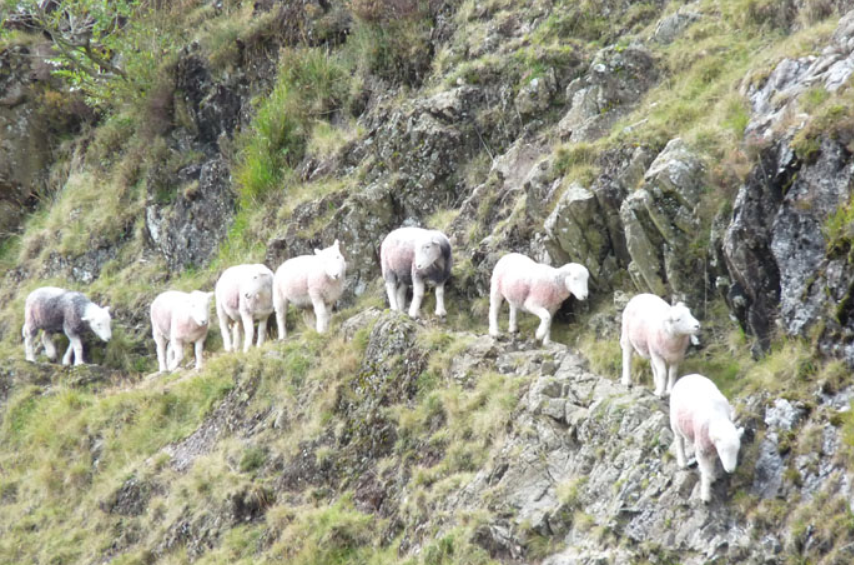
Blackloss is the term used for the unexplained losses of lambs on extensive grazings in the Highlands of Scotland, usually noted by hill sheep farmers as occurring between marking the lambs after lambing and gathering them back in from the hills for autumn sales each year. Predation by wild birds and mammals, high parasite burdens and disease are often given by farmers as presumed reasons for the losses. Abortions, poor ewe nutrition resulting in malnutrition of lambs and lambs dying of hypothermia, trace element deficiencies, phytotoxicities, or infectious diseases could also be significant contributory factors.

The white-tailed eagle is a native species to Scotland which has been reintroduced after becoming extinct through persecution at the start of the 20th Century. There have been a small number of studies seeking to quantify the impacts of white-tailed eagle on sheep farming. The studies concluded that most lambs found in eagle nests were taken as carrion. However, more recent work has confirmed that in some cases white-tailed eagles are bringing freshly dead lamb carcasses to the nest. Post mortem examinations have identified that the majority of these freshly dead lambs have had a range of diseases, deficiencies or parasite loads which would have severely compromised the health of the animal. These conditions would have left livestock vulnerable to predation and in many cases would have been the predisposing cause of death.

This PhD will seek to a) define more accurately what is meant by the term blackloss, b) identify the underlying factors leading to blackloss, and c) quantify the part that white-tailed sea eagles play in the losses. To achieve this the candidate will study farms and crofts within and outwith the white-tailed eagle foraging range and seek to:

• Characterise individual farms and crofts on the basis of habitat occurrence and condition, flock management practices, degree of parasite burden, disease prevalence and predator pressure;
• Assess productivity, wastage and resource efficiency of each flock; Assess the condition of individual ewes and lambs within the flocks together with a range of indices of animal health;
• Compare and contrast the characteristics of lambs being lost with the characteristics of the wider cohort of lambs on those farms and crofts;
• Model (using multivariate analyses and general linear models with environmental covariates) the variation in production across these farms and crofts and compare and contrast the key factors driving that variation at farm and croft level.

The successful candidate will be registered jointly at the University of Edinburgh University (within the Royal (Dick) School of Veterinary Studies) and SRUC, supervised by Prof Davy McCracken, Prof Neil Sargison, Dr Ann McLaren and Dr Franz Brulisauer and will also benefit from extensive collaboration with Scottish Natural Heritage.

The entry qualification for this PhD studentship is a first class or upper second class honours degree and/or a relevant postgraduate degree, in agricultural, animal or environmental science. Whilst experience in parasitology or veterinary post-mortem techniques would be useful, it is certainly not essential as the student will receive training.

The stipend will be set at UKRI recommended levels for a 3.5 year-period and the studentship is funded to pay domestic tuition fee levels for UK/EU students. The student will receive an annual student stipend (of £14,777 at 2018/19 rate). This studentship will fund to pay the tuition fees at home fees rate only. International students must provide evidence of sufficient funds to cover the higher international student tuition fee level (approximately £16,740 per year would be required).

The expected start date is 1st September 2019. The PhD will be based in Edinburgh but will involve extensive travel in the west Highlands of Scotland. A full current driving licence is therefore essential.

SRUC, Scotland’s Rural College, delivers comprehensive skills, education and business support for Scotland’s land-based industry founded on world class, sector leading research, education and consultancy. SRUC’s joint submission with the University of

Edinburgh to the Agriculture, Veterinary and Food Science subpanel of the Research Excellence Framework (REF2014) ranks top in the UK on research power.

To apply for this studentship, please complete the application and equal opportunities monitoring forms available by clicking on the links below.

Completed forms and any questions should be sent to SRUC’s Postgraduate Administrator pg.research@sruc.ac.uk quoting reference SRUC/2019-23/McCracken.

CVs will not be accepted without a completed application form. If English is not an applicant’s first language, an approved English language certificate may be required – see further particulars for more details.

To have an informal discussion about this studentship, contact Davy McCracken davy.mccracken@sruc.ac.uk.

The closing date for applications is 5pm on 3rd March 2019. 

Closing Date
3 Mar 2019
For more information please click here.

Worldwide Veterinary Service – VOLUNTEER TO HELP RUN WORKING DONKEY HEALTH AND WELFARE CAMPS IN BUKOMBE TANZANIA 2019

Worldwide Veterinary Service is a UK registered charity helping animals in places where no one else can.

WVS offers free vet care to animals in need all over the world. We firmly believe in the ethos of a united profession championing animal welfare worldwide.

Why? Because every animal matters.

VOLUNTEER TO HELP RUN WORKING DONKEY HEALTH AND WELFARE CAMPS IN BUKOMBE TANZANIA 2019

Bukombe is a district in the north-west region of Tanzania with approximately 3,000 working donkeys. These animals face tough working conditions and are expected to work long hours, often day and night, pulling heavy loads each day to provide a source of income for their owners. The donkeys face a range of serious welfare issues, ranging from severe, non-healing neck wounds due to the type of cart they pull (designed for oxen not donkeys), to general poor health from a lack of veterinary knowledge and skills, and lacking awareness of basic donkey husbandry.

WVS have set up a working donkey health and welfare camps to tackle these important issues and improve donkey welfare across the district. The campis aimed at providing international vet students, as well as local Tanzanian vets and para-vets with a unique opportunity to learn and practise key equine medical and surgical skills whilst helping to treat these donkeys and improve their lives, and those of their owners. You will be based at a local charity (Tanzania Humane Charity, TAHUCHA) in Ushirombo. Whilst volunteering on this course you will experience the raw beauty of rural Tanzania whilst you have the opportunity to help supervise veterinary students, as well as make a much needed, positive contribution towards equine welfare.

The aims of the experience are:

1. To provide the working donkeys of Bukombe with essential veterinary attention to help improve their health and welfare.

2. To provide international veterinary students with a supported environment for them become confident in key veterinary knowledge and skills for veterinary practice (day one competencies), whilst experiencing a unique insight into the issues facing working donkeys in countries such as Tanzania.

3. To provide a focused learning experience to local Tanzanian vets and paravets who lack essential knowledge and skills in equine medicine and surgery.

4. To provide the local charity with support to continue treating local working donkeys, and provide expertise through veterinary specialist staff to improve local veterinary services.

2. To help educate donkey owners on how to care their working donkeys to improve the lives of both them and their donkeys (one health concept).

For more information please click here.

Worldwide Veterinary Service – GRENADA SPCA – VOLUNTEER VETS AND VET NURSES

Worldwide Veterinary Service is a UK registered charity helping animals in places where no one else can.

WVS offers free vet care to animals in need all over the world. We firmly believe in the ethos of a united profession championing animal welfare worldwide.

Why? Because every animal matters.

GRENADA SPCA – VOLUNTEER VETS AND VET NURSES

We are looking for volunteer vets and vet nurses to lend a helping hand at the charity animal shelter on the beautiful island of Grenada in the West Indies! Volunteers will be required to assist in general health checks and surgeries.

The Grenada Society for the Prevention of Cruelty to Animals (GSPCA) requires qualified veterinarians with a minimum of two years post qualification experience to assist at their clinic throughout the year.

Dates are therefore flexible and volunteers are invited to submit their available dates for consideration. Originally founded in 1936 as the Royal Society of the Prevention of Cruelty to Animals, the Grenada SPCA is one of the oldest societies in the Caribbean.

Based in St George’s, the capital and port city of Grenada, the GSPCA is a non-profit, volunteer organization employing a full time veterinarian along with technical staff and admin manager.

Their programs include: low cost and free spay/neuter clinics vaccination clinics, volunteer vet scheme and community outreach programs for unwanted, abused, neglected or stray animals.

Their hospital offers: low cost spays and neuters, vaccinations, de-worming along with general care in a low cost clinic.

The country this project is based in is listed as a high risk of Zika virus on the Centre for Disease Control (CDC)  website. Please follow the advice on their website when considering participating in this project.

For more information click here.

International Veterinary Seminars – Feline techniques- how i manage common problems – Kauai – June 24th – 27th, 2019

IVS is the largest small group Veterinary Continuing Education seminar provider in North America. Our interactive and informative seminars are held at destination locations which you’ll love!

Feline techniques- how i manage common problems

Kauai

  |   June 24th – 27th, 2019


Michael Lappin D.V.M., Ph.D.

Diplomate, American College of Veterinary Internal Medicine
Professor of Medicine
Colorado State University

Susan Little D.V.M.

Dipl. American Board of Veterinary Practitioners (Feline Practice)
Bytown Cat Hospital
Ottawa, ON
Canada

Catriona MacPhail D.V.M., Ph.D.

Diplomate, American College of Veterinary Surgeons
Associate Professor of Surgery
Colorado State University

Drs. Michael Lappin and Susan Little are two of the well-known feline interested veterinarians in North America. Dr. Little is board certified in feline medicine by the ABVP and owns two feline only practices in Ottawa, Canada. Dr. Lappin in an internal medicine specialist has been involved with feline clinical research ever since reporting the Toxoplasma gondii IgM and IgG tests in 1989. His research group at Colorado State University completes approximately 15 feline clinical research projects per year. Dr. Little and Lappin have lectured together multiple times and most recently spoke to packed houses at both NAVC and WVC. We have also added Dr. Catriona MacPHail to the team. Catriona is a world renowned surgeon who will present a series of lectures on how she manages common feline surgical problems. The three speakers promise these lectures to be informative, fun and practical.

For more information click here

International Veterinary Seminars – How I manage common clinical problems – Key West spring –   April 8th – 10th, 2019

IVS is the largest small group Veterinary Continuing Education seminar provider in North America. Our interactive and informative seminars are held at destination locations which you’ll love!

How I manage common clinical problems

Key West spring

  |   April 8th – 10th, 2019

Kathryn Good D.V.M.

Diplomate, American College of Veterinary Ophthalmologists
Clinical Ophthalmologist
U.C. Davis

Andrea Eriksson De Rezende D.V.M.

Diplomate, ACVIM (Cardiology)
Staff Cardiologist
Blue Pearl Specialty & Emergency Pet Hospital
Paramus, NJ

Andrea & Kathy are going to discuss management of the most common problems that they encounter in their clinical practices. This course will present a practical approach to the diagnosis and management of these common problems using a combination of didactic and case-based teaching. This combination of a Cardiologist and an Ophthalmologist is sure to provide you with some very pratical tips on a broad range of topics.

For more information click here